
Heat Transfer Printing in Los Angeles — HTV, Vinyl, and Film
By Louis A. Sandoval · Owner, Custom Ink & Thread
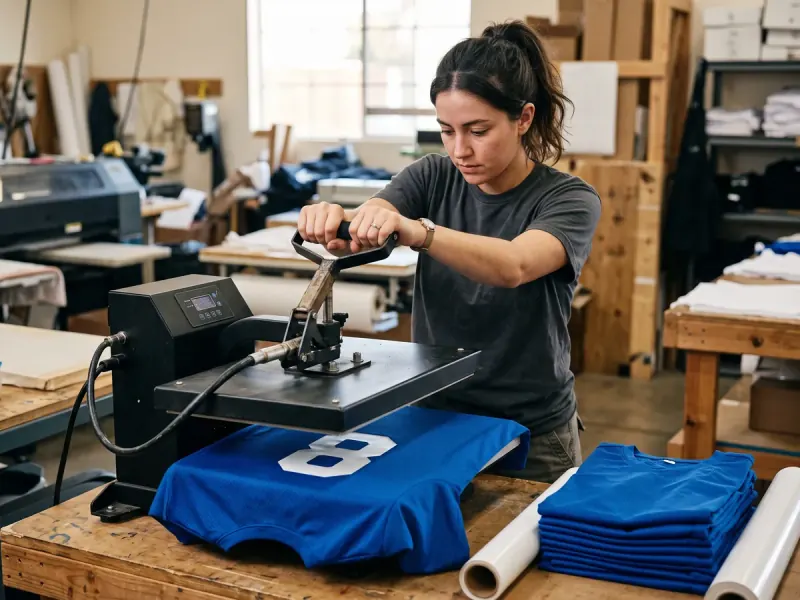
Heat transfer printing in Los Angeles including HTV, vinyl, and DTF transfers. Full-color custom apparel with no minimums and 2–4 day turnaround times.
Heat transfer printing is a category, not a single method. It covers heat transfer vinyl (HTV), DTF film transfers, sublimation transfers, and plastisol transfers—each with different strengths depending on fabric type, color count, durability requirements, and order size. When someone searches for heat transfer printing, they usually want full-color capability on fabrics that screen printing cannot easily reach, or they need variable designs across a single order without paying per-screen setup.
HTV works well for names, numbers, and simple vector logos on custom t-shirts, hoodies, and bags. The vinyl is cut on a plotter and heat-pressed, producing a smooth, slightly raised surface that holds up to regular washing. DTF transfers expand the range to photographic and gradient artwork on cotton, polyester, and blends—making them the go-to when you need full color without the per-screen costs of traditional printing.
At our South Los Angeles shop, production runs on a two-to-four-day timeline for most standard orders. No minimums let you transfer a single piece for proofing or on-demand fulfillment. If your project has both simple logo pieces and complex full-color pieces, combining HTV for the text work with DTF for the graphics under one roof keeps your vendor count at one and your timeline predictable.
Frequently Asked Questions
- HTV is cut vinyl applied with a heat press—ideal for simple text and vector logos. DTF is a printed film transfer that reproduces full-color, photographic artwork on a wide range of fabrics.
- Yes. DTF transfers and sublimation transfers both adhere well to polyester. HTV also works on poly blends, though adhesion should be tested on the specific fabric first.
- Properly applied transfers withstand fifty-plus wash cycles when care instructions are followed. Wash inside-out on a gentle cycle and avoid high-heat drying for maximum longevity.
- For small runs and multi-color designs, heat transfer methods avoid per-screen setup fees, making them more economical. For large single-design runs, screen printing typically costs less per unit.